
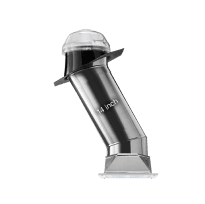
 Tubular Skylights
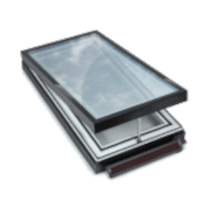 HSE Skylights
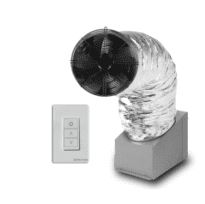 Whole House Fans
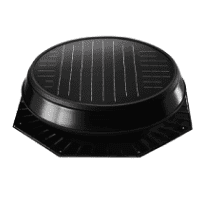 Solar Attic Fans
 Garage Fans
Natural Daylight and the Science of Sustained Focus
Focus is not simply a matter of willpower. It is a biological state, one that is actively supported or undermined by the physical environment.1
How to Set Up a Home Office for Maximum Productivity
Designing Spaces That Improve Focus with Natural Daylight
Natural daylight is one of the most powerful environmental levers available for promoting the alertness, visual comfort, and cognitive readiness that sustained concentration requires.1,2
01 · Attention Span and the Light Environment
When natural light enters the eye, it activates specialized photoreceptors that send signals directly to the brain’s alertness centers, suppressing melatonin, stimulating serotonin and cortisol, and promoting the wakefulness that focused work demands.1
A landmark study by researchers at the University of Manchester found that participants exposed to bright daytime light demonstrated reaction speeds 7 to 10 percent faster than during periods of dim light, measured in everyday life settings, not a controlled laboratory.3
That is a meaningful cognitive advantage, available simply by improving the quality of the light in the spaces where people work and learn.3
faster reaction speeds under bright daylight light (University of Manchester)3
02 · Visual Comfort and Reduced Eye Fatigue
Visual discomfort is one of the most common and most underappreciated drains on cognitive performance.4
Glare forces the eye to constantly readjust. Flicker, common in older fluorescent fixtures, causes headaches and distraction even when it is not consciously perceived. High contrast between bright perimeter areas and dark interior zones means the eyes are working harder than they should, consuming cognitive resources that should be directed toward the task at hand.4
Solatube tubular daylighting devices address all of these issues simultaneously. Solatube TDDs capture daylight at the roof level and deliver it through advanced optical diffusers that scatter light evenly across the room, eliminating glare, eliminating flicker, and ensuring that natural light reaches deep into the floor plate rather than pooling near the perimeter.4
reduction in eyestrain reported by workers in daylit environments (Cornell University)5
reduction in headaches compared to conventionally lit spaces (Cornell University)5
03 · Alertness and Classroom Engagement
The academic performance evidence is compelling. The Heschong Mahone Group studied more than 21,000 students across three school districts and found that students in classrooms with the most natural daylight demonstrated 20% greater improvement in standardized math test scores and 26% greater improvement in reading scores over one school year, compared with students in classrooms with the least daylight.⁶˒⁷
Solatube TDDs are an effective solution for schools seeking to bring these benefits to every classroom, including interior rooms and north-facing spaces that receive little natural light through conventional windows.
faster progress on math tests over one year in the most daylit classrooms6
faster progress on reading tests over the same period6
students studied across three school districts (Heschong Mahone Group)6,7
04 · Workplace Productivity
The same principles that improve student learning outcomes apply directly to workplace performance.2,3
Natural daylight supports the mid-morning alertness peak, reduces the afternoon energy dip, and creates the kind of visually comfortable environment where people can sustain high-quality work for longer.2,3,4
Solatube tubular daylighting devices are widely used in commercial buildings to bring natural light into interior offices, open-plan work areas, conference rooms, and break spaces, ensuring that every employee, regardless of where they sit in the building, has access to the cognitive benefits of natural daylight.2
05 · Balanced, Evenly Distrubuted Daylight
The most effective daylighting for focus is not simply bright, it is balanced. Uniform illuminance across the entire room, without hot spots or dark corners, is what creates the visually quiet environment that allows the brain to direct its full attention to the task at hand.4
Solatube TDDs are specifically designed to achieve this. By delivering diffused natural light from the ceiling rather than from a single-sided window, Solatube systems create a more even, shadow-free light environment than perimeter glazing alone can provide.4
FAQs
How does natural daylight support focus and concentration?
Natural daylight helps support focus by promoting daytime alertness and creating comfortable visual environments. Research has shown that access to daylight is associated with improved concentration, reduced fatigue, and greater productivity in workplaces and learning environments. Even, well-distributed daylight also helps reduce eyestrain and visual discomfort during tasks that require sustained attention.
What type of lighting is best for focus?
Lighting that supports focus provides comfortable illumination with minimal glare, even light distribution, and good color rendering. Natural daylight is widely regarded as the ideal light source because it changes throughout the day and supports the body's natural circadian rhythm. In interior spaces, daylighting systems can help extend these benefits to areas where windows are not practical.
Can lighting reduce mental fatigue?
Yes. Poor lighting can contribute to eyestrain, visual discomfort, and fatigue, making it more difficult to sustain attention over time. Comfortable lighting with even illumination, minimal glare, and good color rendering helps reduce visual effort, allowing people to stay focused on work, learning, or other tasks for longer periods.
Why does glare affect focus?
Glare can reduce visual comfort by making it harder to read, view screens, or perform detailed tasks. High contrast between bright and dark areas may also contribute to visual fatigue over time. Lighting that delivers evenly distributed, diffused daylight helps create more comfortable environments that support concentration in offices, schools, healthcare facilities, and homes.
Does classroom lighting affect student performance?
Research has found that access to quality daylight in classrooms is associated with improved student performance, greater attentiveness, and better attendance. While many factors influence learning outcomes, comfortable lighting with good visual quality and reduced glare helps create environments that support concentration throughout the school day.
How to Set Up a Home Office for Maximum Productivity
Designing Spaces That Improve Focus with Natural Daylight
Explore more of the Human Benefits Hub
References
Numbered sources correspond to the superscript markers in the page copy. Study-design limitations are noted where they materially affect interpretation.
- 1. Brown et al. (2022). Recommendations for daytime, evening, and nighttime indoor light exposure. PLOS Biology, 20(3), e3001571.
- 2. Wirz-Justice et al. (2021). The relevance of daylight for humans. Biochemical Pharmacology, 191, 114304.
- 3. Didikoglu et al. (2025). Relationships between light exposure and aspects of cognitive function in everyday life. Communications Psychology, 5, 4. Observational study of 58 adults; it did not test a building daylighting intervention.
- 4. Boyce (2014). Human Factors in Lighting, 3rd ed. CRC Press.
- 5. Hedge (2018). Workplace daylight study conducted for View Inc., Cornell University Human Factors and Ergonomics Laboratory. Industry-sponsored field study of electrochromic-window offices; symptoms were self-reported.
- 6. Heschong Mahone Group (1999). Daylighting in Schools. Report for Pacific Gas and Electric Company. Observational analysis; reported effects varied among districts.
- 7. National Research Council (2007). Green Schools: Attributes for Health and Learning. National Academies Press. Reviews limitations and cautions against a simple causal interpretation of the school daylight results.