
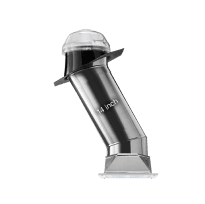
 Tubular Skylights
 HSE Skylights
 Whole House Fans
 Solar Attic Fans
 Garage Fans
Daylighting for ADHD: Creating Environments Where Focus Is Possible
For individuals with Attention-Deficit/Hyperactivity Disorder, the physical environment is not a neutral backdrop, it is an active participant in their ability to focus.
Creating a More ADHD-Friendly Home with Natural Light
Designing ADHD-Friendly Learning Environments
The wrong lighting environment can make attention deficits significantly worse.1
01 · Reducing Visual Overstimulation
ADHD is frequently accompanied by sensory processing differences.1
What a neurotypical student might filter out as background noise, the slight flicker of a fluorescent light, the glare from a window, the uneven contrast between bright and dark areas of a room, can be genuinely overwhelming for a student with ADHD, consuming attentional resources that should be directed toward learning.1
Solatube tubular daylighting devices are specifically suited to address this challenge. Solatube TDDs deliver full-spectrum natural light through advanced optical diffusers that scatter light evenly across the room, eliminating the harsh bright spots, deep shadows, and visual unpredictability that trigger sensory overload.
Because Solatube natural daylight is free from the artificial flicker associated with fluorescent fixtures, it provides a calm, consistent visual environment that reduces the sensory burden on students with ADHD, freeing up cognitive resources for learning.1
02 · Supporting Sustained Attention
Visual comfort is directly tied to the ability to sustain attention.1
When a student is squinting to read the board due to glare, or distracted by the flicker of an overhead light, cognitive energy is being consumed by visual processing rather than learning.
Solatube TDDs are engineered to capture diffused daylight while rejecting the overpowering heat and glare of direct midday sun, providing a visually comfortable classroom environment throughout the school day. A classroom lit primarily by Solatube natural daylight allows students with ADHD to maintain focus on their tasks for longer durations, with fewer attention lapses driven by environmental discomfort.1
03 · Calmer Learning Environments
The predictability and consistency of Solatube natural daylight is itself a calming influence.1
Unlike artificial lighting that can vary in intensity, flicker as fixtures age, or shift in color as bulbs warm up, Solatube TDDs deliver a steady, reliable quality of natural light throughout the day.
For students with ADHD who rely on environmental consistency to feel regulated and in control, this predictability matters. A classroom that feels visually calm and stable is one where attention is more readily available.1
04 · Circadian Regulation And Attention
Emerging research has reframed ADHD in part as a circadian rhythm disorder.2
A majority of individuals with ADHD exhibit a delayed circadian phase, their internal clocks run later than those of neurotypical individuals, making it harder to fall asleep at night and wake up in the morning. Chronic sleep deprivation directly worsens the core symptoms of ADHD.2,3,4
Bright natural daylight in the morning is the most effective non-pharmacological intervention for advancing the delayed circadian phase, and Solatube TDDs installed in classrooms used during the early school day ensure that students receive this critical morning light signal, supporting better sleep patterns and improved daytime attention over time.2,5,6
05 · Strategies That Complement Educational Interventions
Daylighting design is not a replacement for educational, behavioral, or pharmacological interventions for ADHD, but it is a meaningful complement to them. By reducing the sensory and circadian stressors that exacerbate attention deficits, a well-daylit classroom creates conditions in which other interventions are more likely to succeed.1,2
Solatube tubular daylighting is one of the most practical and cost-effective environmental strategies available to schools seeking to support students with ADHD, and the benefits extend to every student in the room.
06 · FAQs
How can lighting affect individuals with ADHD?
Individuals with ADHD can be sensitive to environmental distractions, including aspects of the visual environment. Lighting that creates glare, harsh contrasts, or visual discomfort may make it more difficult to concentrate for some people. Comfortable lighting with even illumination and good visual quality can help create environments that better support focus and learning.
What lighting features are best for ADHD-friendly spaces?
ADHD-friendly spaces benefit from lighting that provides even illumination, minimizes glare, and reduces harsh shadows and visual distractions. Access to natural daylight also supports the body's circadian rhythm, which plays an important role in maintaining healthy sleep and daytime alertness. Because individual needs vary, flexible, comfortable lighting is generally recommended.
Can natural daylight support focus for people with ADHD?
Research suggests that access to natural daylight can support attention, daytime alertness, and overall well-being by reinforcing healthy circadian rhythms. While daylight is not a treatment for ADHD, providing comfortable access to natural light may help create environments that support learning, work, and everyday activities.
Why is glare important in ADHD-friendly classrooms and workspaces?
Glare can make reading, screen use, and other visual tasks more difficult by increasing visual discomfort and distraction. Lighting that delivers evenly distributed, diffused daylight helps reduce harsh contrasts and create more visually comfortable environments that support sustained attention.
Can improving lighting make a difference for children or adults with ADHD?
Lighting is one of many environmental factors that can influence comfort and concentration. Increasing access to natural daylight while reducing glare and visual distractions may help create more supportive learning and working environments. High-performance tubular daylighting systems can also bring daylight into interior spaces where traditional windows are not practical.
Creating a More ADHD-Friendly Home with Natural Light
Designing ADHD-Friendly Learning Environments
Explore more of the Human Benefits Hub
References
- 1. Jurek et al. (2025). Sensory processing in individuals with attention-deficit/hyperactivity disorder compared with neurotypical controls: a systematic review and meta-analysis. Journal of Psychiatric Research. The review supports greater sensory sensitivity and related processing differences in ADHD; it does not test daylighting or Solatube products.
- 2. Coogan et al. (2017). A systematic review of circadian function, chronotype and chronotherapy in attention deficit hyperactivity disorder. Attention Deficit and Hyperactivity Disorders, 9, 129-147. Review found consistent evidence of later chronotype and delayed circadian markers, but did not establish ADHD itself as a circadian-rhythm disorder.
- 3. van der Ham et al. (2024). Sleep problems in adults with ADHD: prevalences and their relationship with psychiatric comorbidity. Journal of Attention Disorders, 28(13), 1642-1652. In a specialty-clinic adult sample, 36% screened positive for delayed sleep-phase syndrome; this does not support a “majority of individuals” claim across all ages.
- 4. Becker et al. (2019). The impact of sleep restriction on daytime functioning in adolescents with ADHD: findings from a crossover sleep restriction/extension study. Journal of the American Academy of Child & Adolescent Psychiatry, 58(4), 433-442. Experimental study supports a causal contribution of shorter sleep to some daytime behaviors in adolescents with ADHD.
- 5. Fargason et al. (2017). Correcting delayed circadian phase with bright light therapy predicts improvement in ADHD symptoms: a pilot study. Journal of Psychiatric Research, 91, 105-110. Small open-label adult study of timed bright-light therapy; not a classroom-daylighting or pediatric trial.
- 6. Brown et al. (2022). Recommendations for daytime, evening, and nighttime indoor light exposure. PLOS Biology, 20(3), e3001571. Expert consensus on light exposure and circadian physiology in healthy adults; not ADHD-specific evidence.