
 Tubular Skylights
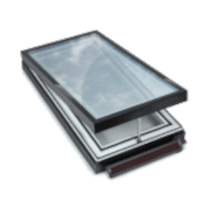 HSE Skylights
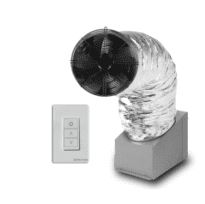 Whole House Fans
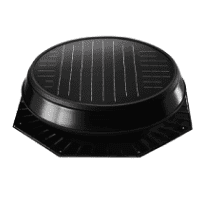 Solar Attic Fans
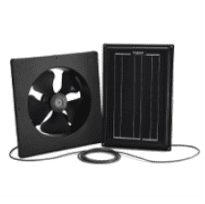 Garage Fans
Light, the Body Clock, and the Buildings We Inhabit
The circadian rhythm is the body’s master internal clock — a 24-hour biological cycle that coordinates sleep, energy, mood, metabolism, immune function, and cognitive performance.1,2
7 Ways to Improve Your Home’s Circadian Lighting Environment
Is Your Workplace Supporting Circadian Health?
The building itself, and the daylighting decisions made in its design, is a direct determinant of occupant health.1,2
01 · What the Circadian Rhythm Is
Chronic poor sleep is not just an inconvenience.
Located in a region of the brain called the suprachiasmatic nucleus, the circadian clock governs the timing of virtually every physiological process in the body. It determines when you feel alert and when you feel sleepy, when your body temperature peaks and when it drops, when hormones are released and when they are suppressed. When the clock is well-synchronized with the natural day, the result is consistent energy, stable mood, restorative sleep, and strong cognitive performance. When it drifts out of alignment — as it does when people are deprived of adequate natural daylight — the effects are felt across every dimension of health and well-being.2
02 · Why Morning Daylight Matters Most
The single most important light signal for the circadian system is bright, blue-rich light in the morning.1,4
This morning light triggers the Cortisol Awakening Response, a natural surge of the body’s primary alertness hormone that promotes wakefulness, focus, and energy. It also sets the timing of melatonin onset that evening, determining how easily a person falls asleep and how restoratively they sleep through the night.1,4
For many people, the morning light signal is weak or absent. Commuting before sunrise, spending the morning in a poorly lit kitchen or office, or living in a home where key rooms face away from the morning sun all mean the circadian system starts the day without the signal it needs.
03 · Sleep Quality, Productivity, and Daytime Alertness
The downstream effects of a well-supported circadian rhythm extend far beyond sleep.
People whose biological clocks are properly synchronized report better mood, sharper focus, more consistent energy throughout the day, and greater resilience to stress.1,2
In the workplace, circadian alignment is directly linked to productivity, decision-making quality, and reduced absenteeism. In the home, it shapes the quality of family life, the energy available for relationships and recreation, and the long-term trajectory of physical and mental health.5
04 · The Impact of Poor Indoor Lighting On The Biological Clock
Modern buildings are, for the most part, poorly aligned with our circadian biology.
The typical indoor light environment is too dim during the day to properly anchor the circadian clock, and too bright at night to allow melatonin to rise naturally. The result is a population that is chronically under-lit during the day and over-lit at night, a combination that disrupts sleep, impairs mood, reduces cognitive performance, and increases the risk of a wide range of chronic health conditions.1,6
“Individuals with greater access to natural daylight in their homes showed improved circadian alignment, better sleep quality, and higher vitality scores compared to periods when their daylight access was reduced.”3International Journal of Environmental Research and Public Health
05 · How Solatube Supports Circadian Alignment
Solatube tubular daylighting devices are uniquely effective at supporting circadian health because they deliver natural daylight to the spaces where people actually spend their time, not just the perimeter rooms that happen to have windows. In commercial buildings, Solatube TDDs bring natural light into interior offices, corridors, conference rooms, and break areas. In homes, they reach kitchens, bathrooms, hallways, and interior bedrooms.1
06 · FAQs
What is circadian lighting?
Circadian lighting is lighting that supports the body's natural 24-hour biological clock, known as the circadian rhythm. Natural daylight is considered the ideal form of circadian lighting because its intensity and color naturally change throughout the day, providing the light cues the body uses to regulate alertness, hormone production, and other biological processes.
How does daylight regulate the circadian rhythm?
Daylight regulates the circadian rhythm by sending light signals through the eyes to the brain's master clock. Bright morning daylight helps synchronize the body's internal clock and supports healthy daytime alertness, while changing daylight throughout the day provides important biological timing cues that help keep the circadian rhythm aligned.
Can artificial lighting replace natural daylight?
While advances in human-centric and circadian lighting have improved artificial lighting, no electric lighting fully replicates the dynamic intensity, color changes, and broad visible spectrum of natural daylight. Natural daylight remains the reference standard for supporting a healthy circadian rhythm, which is why access to daylight is increasingly recognized as an important element of healthy building design.
How much daylight do you need for circadian health?
Research suggests that regular exposure to bright natural daylight - especially during the morning and daytime - helps support a healthy circadian rhythm. The exact amount varies depending on factors such as age, season, location, and time spent outdoors, but increasing daytime exposure to natural light is widely recognized as beneficial for circadian health.
What are the health impacts of circadian misalignment?
Circadian misalignment occurs when the body's internal clock becomes out of sync with the natural day-night cycle. It can result from insufficient daytime daylight, excessive exposure to artificial light, shift work, or irregular schedules. Research has linked circadian disruption to reduced cognitive performance, lower daytime alertness, mood changes, and other long-term health concerns.
Why does full-spectrum daylight matter for circadian health?
Natural daylight contains a broad range of visible wavelengths that help regulate the body's circadian rhythm. Unlike static electric lighting, daylight changes in intensity and color throughout the day, providing important biological cues that help keep the body's internal clock aligned. High-performance tubular daylighting systems are designed to preserve these natural daylight characteristics while delivering daylight into interior spaces that may otherwise rely entirely on electric lighting.
7 Ways to Improve Your Home’s Circadian Lighting Environment
Is Your Workplace Supporting Circadian Health?
Explore more of the Human Benefits Hub
References
Numbered sources correspond to the superscript markers in the page copy. Study-design limitations are noted where they materially affect interpretation.
- 1. Brown et al. (2022). Recommendations for daytime, evening, and nighttime indoor light exposure. PLOS Biology, 20(3), e3001571.
- 2. Hastings, Maywood & Brancaccio (2018). Generation of circadian rhythms in the suprachiasmatic nucleus. Nature Reviews Neuroscience, 19(8), 453–469.
- 3. Nagare et al. (2021). Access to daylight at home improves circadian alignment, sleep, and mental health. International Journal of Environmental Research and Public Health, 18(19), 9980. Randomized crossover study with 20 participants.
- 4. Khalsa et al. (2003). A phase response curve to single bright light pulses in humans. Journal of Physiology, 549, 945–952.
- 5. Boubekri et al. (2020). Optimized daylight and views: sleep duration and cognitive performance of office workers. International Journal of Environmental Research and Public Health, 17(9), 3219.
- 6. Tähkämö, Partonen & Pesonen (2019). Systematic review of light exposure impact on human circadian rhythm. Chronobiology International, 36(2), 151–170.