
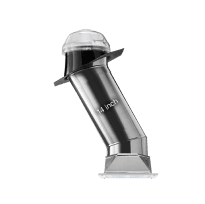
 Tubular Skylights
 HSE Skylights
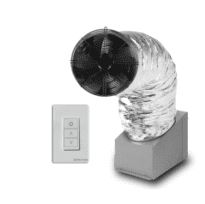 Whole House Fans
 Solar Attic Fans
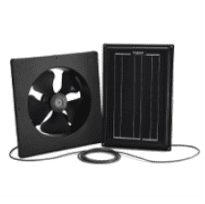 Garage Fans
How Natural Daylight Shapes the Quality of Your Sleep
Sleep is not just about what happens when you close your eyes. It is shaped by everything your body experiences during the hours before, and the most important of those factors is light.1
How Daytime Light Exposure Transforms Nighttime Sleep
Infographic: The ROI of Well-Rested Employees
The amount and quality of natural daylight you receive during the day directly determines how deeply and restoratively you sleep at night.1,2
01 · How Daylight Influences Sleep
The body’s sleep-wake cycle is governed by melatonin — a hormone produced by the brain in response to darkness. Melatonin onset in the evening is directly tied to the light signals the brain receives during the day. Bright, natural daylight in the morning suppresses melatonin and signals to the brain that the day has begun. Morning daylight helps synchronize the body’s internal circadian clock, reinforcing the natural cycle of alertness during the day and melatonin production in the evening. As bedtime approaches, melatonin levels typically begin to rise according to the body’s circadian timing, provided evening light exposure does not suppress this natural process.1,3
When people spend their days in poorly lit indoor environments — as most of us do — this signal is weak and inconsistent. Research confirms it: office workers with access to natural daylight sleep an average of 46 minutes more per night than those without window access, and report significantly better sleep quality overall.4
02 · Sleep Quality Matters
Chronic poor sleep is not just an inconvenience.
People who consistently sleep fewer than six hours per night face a significantly higher risk of hypertension, heart attack, stroke, obesity, and depression. Emerging research links long-term sleep deprivation to an increased risk of dementia and Alzheimer’s disease.4,6,7
minimum of nightly hours of sleep needed to reduce health risks5
estimated annual cost of insufficient sleep to the U.S. economy in lost productivity (RAND Corporation)8
of lost productivity per worker each year from insomnia alone (Harvard Medical School)9
03 · How Solatube Helps
Solatube TDDs capture daylight at the roof level and deliver it as bright, full-spectrum natural light into any room in the home or building, including interior spaces that conventional windows cannot serve.
By bringing the intensity and quality of natural daylight into the spaces where people spend their days, Solatube helps ensure the body receives the light signals it needs to sleep well at night.1
04 · FAQs
How does natural daylight affect sleep quality?
Natural daylight helps regulate the body's sleep-wake cycle by reinforcing the circadian rhythm. Exposure to bright daylight during the day supports healthy daytime alertness and allows melatonin, the hormone that promotes sleep, to rise naturally in the evening. Research has shown that people who receive regular daytime daylight often experience better sleep quality and feel more rested.
Can artificial lighting replace natural daylight for healthy sleep?
Modern LED lighting has improved significantly, but it does not fully replicate the changing intensity and color of natural daylight throughout the day. These natural variations provide important biological cues that help regulate the body's internal clock. While well-designed electric lighting can support visual comfort and complement daylight, regular exposure to natural daylight remains an important part of healthy sleep.
Do windows provide enough natural daylight to support healthly sleep?
Windows provide valuable access to natural daylight, but the amount of light entering a space depends on factors such as orientation, season, time of day, weather, and distance from the window. Interior rooms and deep floor plans often receive limited daylight. High-performance tubular daylighting systems can extend natural daylight into these spaces, increasing access to daylight where traditional windows are not practical.
How much natural daylight do you need to support healthy sleep?
Research suggests that regular exposure to bright natural daylight- especially earlier in the day - helps support a healthy sleep-wake cycle. The amount of daylight needed varies based on factors such as age, location, season, and daily routine, but increasing daytime exposure to natural light is widely recognized as beneficial for healthy sleep.
Can improving daylight in a building really make a difference to sleep?
Research suggests that greater access to natural daylight during the day is associated with better sleep quality, improved daytime alertness, and stronger circadian alignment. Homes, workplaces, schools, and healthcare facilities that increase access to natural daylight can help support healthier sleep patterns by providing the light cues the body relies on throughout the day.
How Daytime Light Exposure Transforms Nighttime Sleep
Infographic: The ROI of Well-Rested Employees
Explore more of the Human Benefits Hub
References
Numbered sources correspond to the superscript markers in the page copy. Study-design limitations are noted where they materially affect interpretation.
- 1. Brown et al. (2022). Recommendations for daytime, evening, and nighttime indoor light exposure. PLOS Biology, 20(3), e3001571.
- 2. Tähkämö, Partonen & Pesonen (2019). Systematic review of light exposure impact on human circadian rhythm. Chronobiology International, 36(2), 151–170.
- 3. Khalsa et al. (2003). A phase response curve to single bright light pulses in humans. Journal of Physiology, 549, 945–952.
- 4. Boubekri et al. (2014). Impact of windows and daylight exposure on office workers’ health and sleep. Journal of Clinical Sleep Medicine, 10(6), 603–611. Observational study; association does not establish causation.
- 5. Itani et al. (2017). Short sleep duration and health outcomes: systematic review and meta-analysis. Sleep Medicine, 32, 246–256.
- 6. Li et al. (2016). Insomnia and the risk of depression: meta-analysis of prospective cohort studies. BMC Psychiatry, 16, 375.
- 7. Bubu et al. (2017). Sleep, cognitive impairment, and Alzheimer’s disease: systematic review. Sleep, 40(1), zsw032. Findings are associative and do not show that sleep loss alone causes dementia.
- 8. Hafner et al. (2017). Why Sleep Matters—The Economic Costs of Insufficient Sleep. RAND Health Quarterly, 6(4), 11. Macroeconomic estimate, not a measured annual loss.
- 9. Kessler et al. (2011). Insomnia and the performance of U.S. workers. Sleep, 34(9), 1161–1171. The 11.3-day figure is a work-performance equivalent from this survey-based analysis.