 29" Skyvault Series
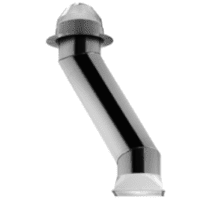 14"/21" SolaMaster Series
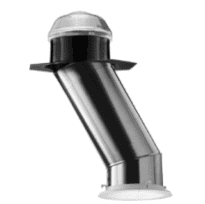 10"/14" Brighten Up Series
 Vertical Markets & Case Studies
 Lunch & Learn
 Modular Buildings
Solatube DS-Radiance BSDF
Intro to BSDF Data Files for Radiance-based Daylight Modeling

Solatube International, Inc. is proud to provide the design community with ground-breaking Bidirectional Spectral Distribution Function (BSDF) data files for our unique optically complex Tubular Daylighting Devices (TDDs) for use in Radiance-based daylighting design and analysis simulation tools. Solatube Daylighting System BSDF data files are available for all 40 primary product configurations of the Brighten Up, SolaMaster, and SkyVault product families. Please refer to Solatube Product Cut Sheets and Cut Sheet Codes to decipher the Solatube BSDF file naming convention. The Radiance file (in XML format) for each supported product configuration includes application notes on its use and the proper Radiance model orientation.
Important Application Notes on File Use/Model Orientation
Radiance-based models require that BSDF files use a single input/output area for a fenestration device. Therefore, the Solatube BSDF files use/report the room-side luminous surface area to define the daylighting aperture characteristics. To account for the proper emission area in the space, the Solatube Daylighting System’s BSDF throughput efficiency has been computed such that the rooftop input area matches the Solatube product’s room-side diffuser output area, being nominally either 10″ DIA, 14″ DIA, 21″ DIA, 29″ DIA, 36″ DIA, or 24″ × 24″, depending upon the product’s effective luminous aperture.
All Solatube Daylighting System Radiance BSDF file product/aperture dimensions are reported in decimal meters.
For Radiance-based models of buildings located in the Northern Hemisphere, due south is aligned with Klems input patches 4, 14, 31, 52, 76, 100, 122, and 137. The Solatube Daylighting System object (and associated BSDF data file) should be properly oriented in daylighting models to reflect this optical system orientation standard.
Within the BSDF file, the following input Klems patches correspond to the primary cardinal directions:
137 – Due South
143 – Due North
140 – Due East
134 – Due West
Note: Numbering of cardinal direction output patches is flipped/reversed.
For Radiance-based daylighting simulation tools and models, the simulation tool’s “Up Orientation Vector” must be properly set to represent the BSDF file being used as a ceiling-based, top-lighting system. The default “Up Orientation Vector” for wall-based products is (0 0 1). For a ceiling-based, top-lighting product, the Up Orientation Vector should be set to (0 1 0), which also properly establishes and aligns the Klems input patch (North) as necessary for ceiling-based products and top-lighting systems.
Solatube DS-Radiance BSDF
Intro to BSDF Data Files for Radiance-based Daylight Modeling


