
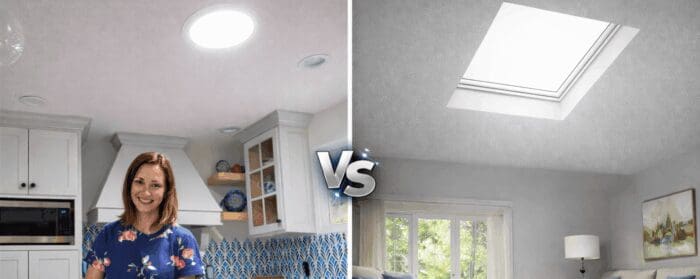
Solatube Tubular Skylights vs Traditional Skylights
Understanding the Differences
When homeowners are looking for ways to bring more natural light into their homes, skylights are often the first solution that comes to mind. But skylights are not the only option, and depending on the space, they may not always be the preferred solution. Tubular daylighting systems offer a different approach to daylighting. Rather than creating large openings in the roof and ceiling, these systems capture daylight through a small rooftop dome and channel it indoors through a highly reflective tube. If you are considering ways to brighten your home, understanding how tubular daylighting compares to traditional skylights can help you make a more informed decision.
Installation: Scope, Time and Disruption
Traditional skylights require a larger roof opening, and in many cases, structural modifications. Installation often involves cutting through both the roof and ceiling, framing a light shaft and finishing drywall. Because of this, skylight projects take a week or two and may involve multiple contractors(roofing contractor, drywall contractor, painting contractor).
Solatube High Tech Skylights (Tubular Skylights) are designed to be less invasive. The smaller roof opening and reflective tubing allow the installer to work between existing rafters, eliminating the need for structural changes or interior drywall work. In many homes, installation can be completed in a single visit, in about 2 hours.
What that means for homeowners:
Less construction inside the home, fewer trades involved, and faster completion, especially in finished spaces.
Light Quality and Thermal Performance
Traditional skylights function like a window in the roof. While they deliver strong daylight, they also introduce glare, uneven light distribution and unwanted heat gain, especially in warmer climates or during mid-day peak sun hours.
Tubular skylights use optical parts and reflective tubing to diffuse sunlight before it enters the room. The result is typically a softer, more even distribution of daylight with minimal solar heat gain.
What that means for homeowners:
Balanced daylight that brightens room without creating, hot spots or shifting patterns of light, helping maintain indoor comfort throughout the year.
Placement Flexibility
As traditional skylights must be installed directly above the space being lit, their placement is limited by attic obstructions or multi-story building layout. This can make their use limited for interior rooms that lack direct roof access.
Tubular daylighting systems can transfer daylight over long distances and around obstructions, making them suitable for spaces such as hallways, closets, bathrooms and other interior rooms, even in multistory homes.
What that means for homeowners:
More opportunities to bring natural light into areas that typically rely on artificial lighting during the day.
Cost Considerations
The cost of adding daylight varies depending on roof type, interior finishes, and installation complexity. Traditional skylights often require additional labor for faming and drywall finishing, which can increase overall project costs.
Tubular skylights generally involve fewer materials and less labor, which make them a more budget friendly option for homeowners without a larger remodel.
What that means for homeowners:
A lower upfront investment for adding natural light, particularly in smaller or enclosed spaces.
Design Options and Features
Modern skylights offer clean lines and views of the sky, which can may be desirable for certain rooms or architectural designs. Tubular daylighting systems, while more compact, offer a range of diffuser styles designed to either blend into different interiors or can add a design element to your space.
Many systems also allow for functional add-ons such as integrated electric lighting, ventilation options, or daylight dimmer features.
What that means for homeowners:
The ability to tailor daylighting solutions to both aesthetic preferences and functional needs.
Performance and Longevity
Both skylights and tubular daylighting systems are designed to bring daylight indoors, but performance can vary depending on materials, installation quality, and climate considerations. Tubular systems are often valued for their sealed designs, impact resistant components, and low maintenance requirements. The circular design allows rain and debris to bypass the rooftop dome, so it’s virtually maintenance-free.
Working with trained installers and choosing products designed for long-term performance can make a meaningful difference regardless of which option you choose.
Choosing the right Daylighting Solution for Your Home
There is no one-size-fits-all when it comes to daylighting. Traditional skylights can be a great choice for open spaces where view architectural impact are important. Tubular daylighting systems offer an alternative for homeowners who want to brighten interior rooms with minimal disruption, excellent thermal performance, and flexible placement.
By understanding how each option works, homeowners can choose a daylighting solution that best suits their home, lifestyle and budget.