
Tubular Daylighting vs. Traditional Skylights: What Designers Should Know
Daylighting is one of the most powerful strategies for creating healthier, more energy-efficient buildings. Architects, builders and facility managers often look to skylights as the default way to bring natural light into interior spaces.
However, advances in daylighting technologies have introduced another option: tubular daylighting devices (TDDs). These systems capture daylight at the roof and deliver it deep into interior spaces through highly reflective tubing.
While both approaches bring natural light indoors, they function very differently – and understanding those differences can help project teams choose the right solution.
Below are some of the key factors architects and building professionals consider when comparing tubular daylighting systems like Solatube® with traditional skylights.
1. Delivering Daylight Deeper into Interior Spaces
Traditional skylights work best when the space being illuminated is directly beneath the roof opening. Because daylight enters through a relatively wide aperture, light levels tend to drop off quickly as the distance from the skylight increases.
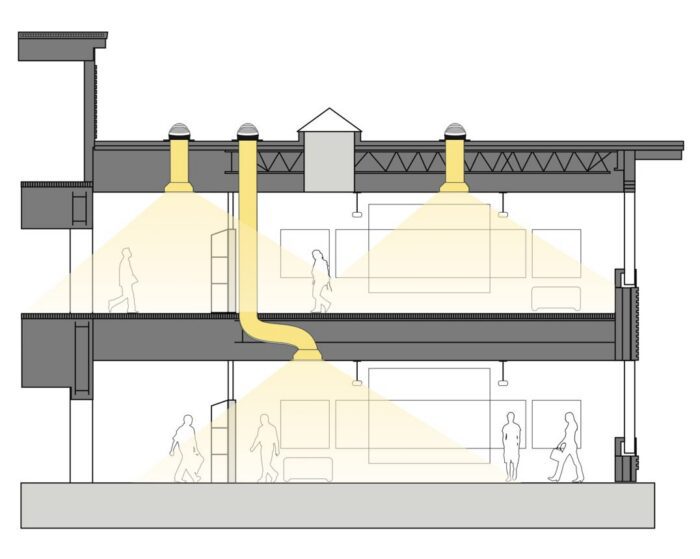
Tubular daylighting devices operate differently. They capture daylight at the roof and transport it through highly reflective tubing, with flexible tube runs allowing light to be delivered much farther into the building. Tubular systems can distribute daylight into areas that would otherwise rely entirely on electric lighting.
2. More Consistent and Balanced Light Distribution
Another difference lies in how daylight is distributed inside the space.
Traditional skylights can sometimes create areas of high brightness directly beneath the opening, with darker zones surrounding it. This can lead to contrast, glare or uneven lighting conditions.
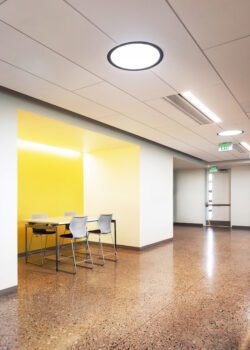
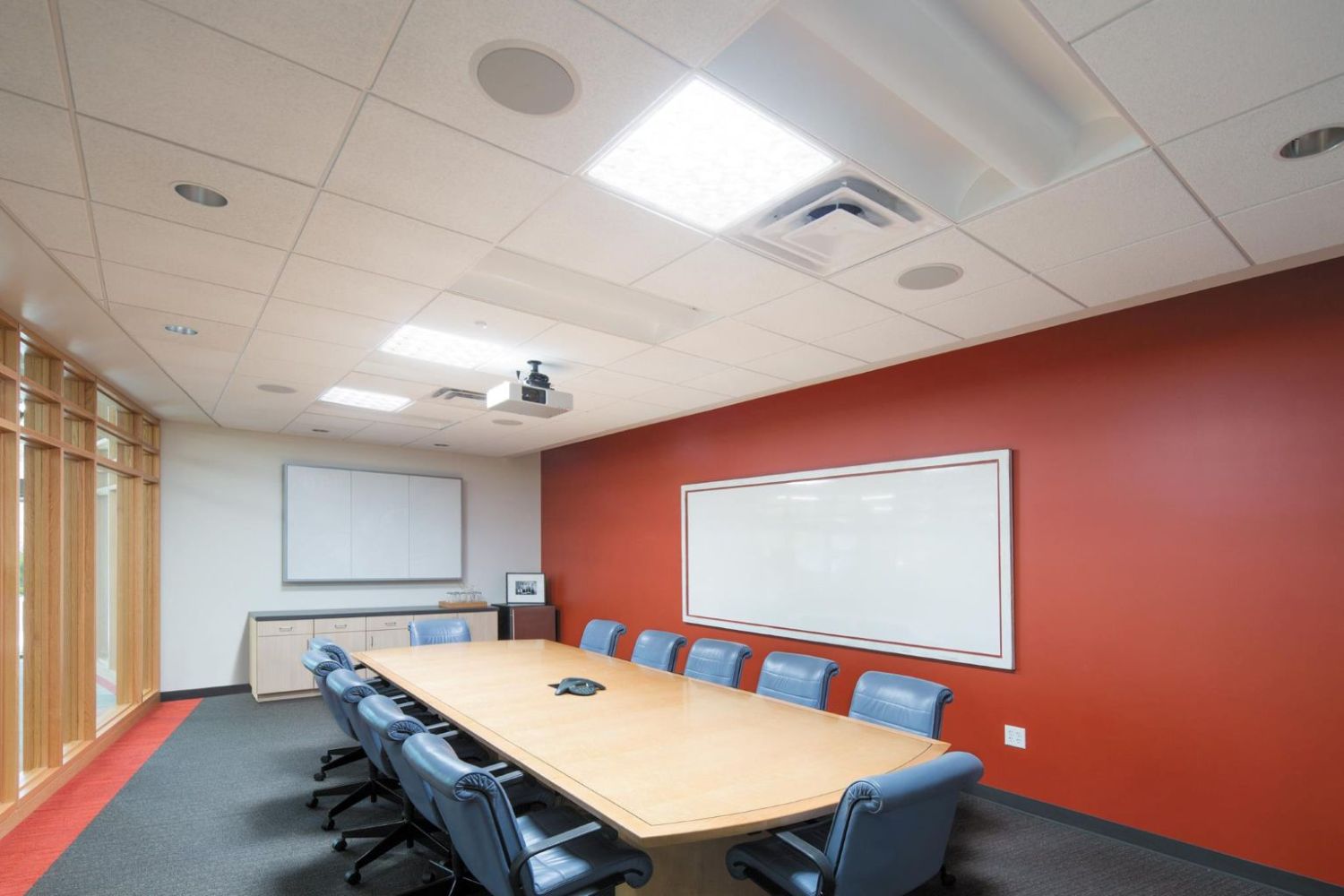
Tubular daylighting devices use advanced optical systems and diffusers designed to spread light evenly throughout the space, producing balanced illumination that integrates more smoothly with electric lighting.
For environments like classrooms, offices or healthcare settings, this consistent daylight distribution can improve visual comfort for occupants.
3. Minimal Structural Impact
Installing traditional skylights often requires larger roof openings and structural modifications, particularly in retrofit projects.
Tubular daylighting systems typically require smaller roof penetrations, making them easier to integrate into a wider range of building types.
Because the tubing can navigate around structural elements such as ducts, trusses or mechanical systems, designers often have more flexibility when incorporating daylighting into existing buildings.
4. Controlling Heat Gain and Glare
Daylighting strategies must carefully balance natural light with thermal performance.
Traditional skylights introduce a relatively large glazing area into the roof. While modern skylight glazing has improved over the years, large openings can still contribute to unwanted solar heat gain or glare if not carefully designed.
Tubular daylighting devices use optical systems designed to capture visible daylight while limiting unwanted heat transfer, helping maintain comfortable indoor conditions while reducing reliance on electric lighting.
This can be particularly beneficial in climates where cooling loads are a concern.
5. Design Flexibility for a Wide Range of Projects
Traditional skylights can serve as strong architectural features, providing views of the sky and creating dramatic daylight effects.
Tubular daylighting devices, on the other hand, are often chosen when the goal is efficient, functional daylight distribution across large areas.
Because they require less roof area and can be routed through complex roof structures, they offer designers another tool for bringing daylight into challenging spaces.
6. Adapting to Future Layout Changes
Building layouts often evolve over time as offices are reconfigured, classrooms are re-partitioned or retail spaces are redesigned.
Traditional skylights provide daylight to a fixed area directly beneath the opening. If interior walls or partitions are added later, those spaces may no longer receive natural light.
Tubular daylighting devices offer greater flexibility. Because daylight is delivered through reflective tubing to ceiling diffusers, the tubing can often be rerouted during renovations to accommodate new walls, partitions or mechanical systems, helping maintain access to natural light as building layouts evolve.
For buildings expected to evolve – such as schools, offices, healthcare facilities and retail environments – this adaptability can help maintain access to natural light over time.
A Complementary Approach to Daylighting
In many projects, skylights and tubular daylighting devices are not mutually exclusive. Each technology serves different design goals.
By understanding how each approach works, architects and building teams can develop daylighting strategies that enhance occupant comfort, improve building performance and reduce reliance on electric lighting.