
Designing for Different Minds
The Role of Light in Neuroinclusive Spaces
A practical guide for architects and designers: Natural daylight can help create welcoming, comfortable spaces, but how people experience light can vary significantly. For autistic individuals, factors such as brightness, glare, contrast, and changes in lighting conditions may influence sensory comfort and the ability to engage with their surroundings. For architects and designers, the opportunity is not to create one ideal lighting environment, but to design spaces that accommodate different sensory needs through thoughtful daylight distribution, predictable
Start with the experience, not the fixture: Imagine moving from a softly lit corridor into a lobby with bright overhead fixtures, reflective flooring and strong sunlight across a reception desk. One visitor may barely notice the transition; another may find it distracting or uncomfortable. Instead of asking whether a building has enough light, ask how its light will be experienced throughout the day and along the occupant journey. Neuroinclusive lighting is not a prescribed brightness level or a universally preferred source. It is a coordinated approach to visual comfort, predictable transitions, task suitability and occupant control. These priorities can benefit many building users, while acknowledging that autistic people have diverse and sometimes opposing preferences. [1–3]
Five Design Moves That Matter
01 | Map Sensory Transitions
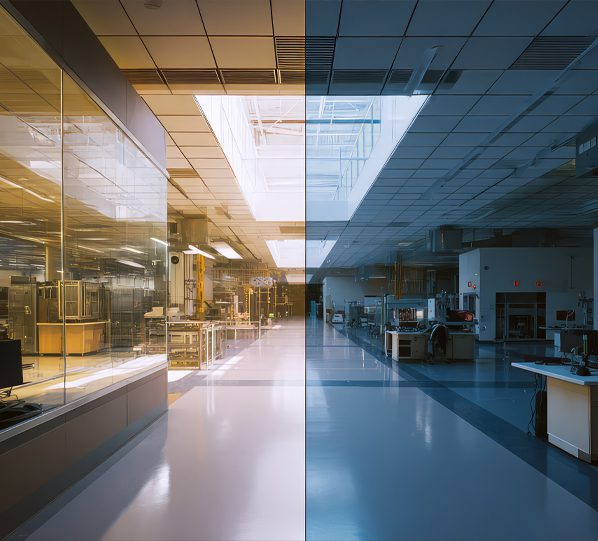
Identify arrival areas, circulation routes, classrooms, meeting rooms and retreat spaces. Review where occupants move between markedly different brightness levels or encounter reflections and direct sun. Plan transitions intentionally rather than treating each room in isolation.
02 | Design for Distribution, Not Just Quantity
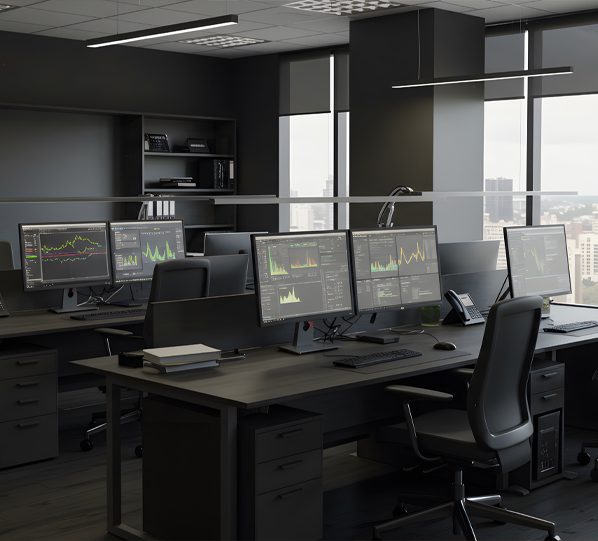
Evaluate not only how much daylight enters a space, but how it is distributed. Bright patches, reflected glare and strong contrasts may create visual discomfort for some occupants. Diffused daylight, thoughtful placement of daylighting systems, appropriate surface finishes and shading strategies can help designers create more balanced visual environments.
03 | Give People Meaningful Control
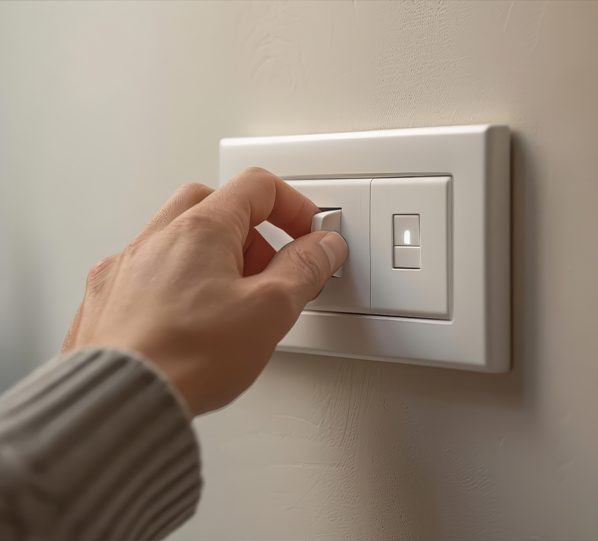
Where feasible, provide zoned lighting, accessible dimming, blinds or shades and alternative seating or work locations. Control should be simple, understandable and available without requiring someone to disclose a diagnosis. Individual control is particularly valuable where preferences differ.
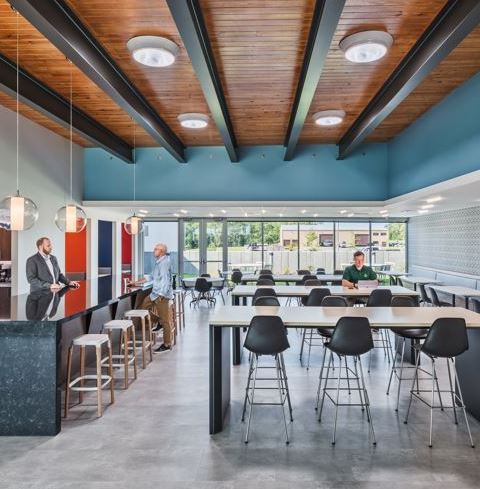
04 | Coordinate Daylight and Electric Light
Daylight varies with weather, time and season. Integrate daylight-responsive electric lighting and suitable controls so the room remains functional as conditions change. Review electric-light flicker characteristics, glare and transitions; do not assume all LED systems behave alike.

05 | Plan for Recovery and Choice
Provide a range of lighting environments within a building, including daylight-rich shared spaces and quieter, lower-stimulation areas where lighting can be independently adjusted. This allows occupants to select environments that better support their individual sensory preferences.
Put the Principles to Work
| Building type |
Design question to ask
|
| Education | Can students choose between daylight-rich activity zones and lower-stimulation settings without leaving the learning environment? |
| Workplaces | Do shared workstations and meeting rooms offer options for glare control and individual lighting preferences? |
| Healthcare and therapy | Can reception, waiting and consultation areas avoid abrupt visual transitions and offer controllable alternatives? |
| Libraries and civic spaces | Can daylight support welcoming shared areas while preserving quieter, visually calm spaces for focused use? |
Where Tubular Daylighting Fits
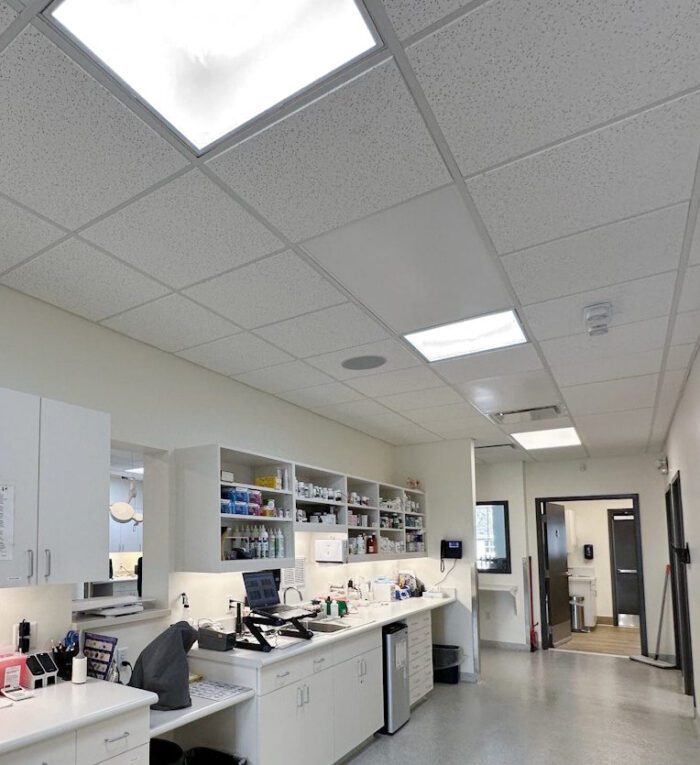
Tubular daylighting devices (TDDs) can be one tool in a layered daylighting strategy. By transporting roof-collected daylight to selected interior locations, they can expand design options in deep-plan spaces where conventional windows or skylights are impractical. Appropriate diffuser selection and placement can help distribute light more evenly than unshaded direct-beam openings in some applications. Actual comfort depends on system configuration, room geometry, surfaces, sky conditions and occupant needs.
For Solatube projects, consider diffuser choice, system spacing, daylight dimming options and integration with electric lighting early in design. Evaluate daylight availability, potential glare and user control through project-specific analysis. No daylighting system alone guarantees a sensory-friendly environment or a particular health outcome.
Designing for More People
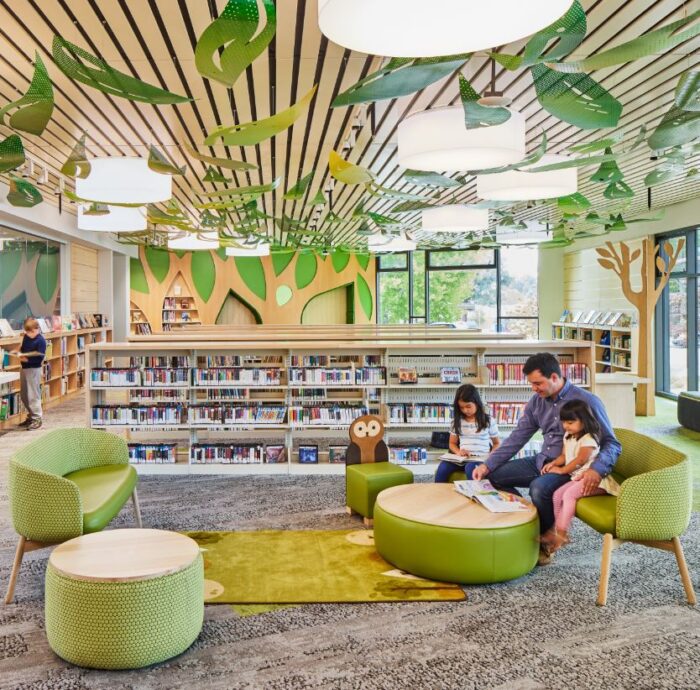
The goal is not to create one supposedly ideal “autism-friendly” light level. It is to give designers and occupants more ways to shape the visual environment. A thoughtful mix of daylight access, distribution, shading, controllability and lower-stimulation alternatives can make buildings more responsive to human differences.
A Design-Team Conversation Checklist
☐ Have we involved autistic occupants or representatives in defining sensory needs and reviewing options?
☐ Where might direct sun, reflected glare or strong contrast appear during occupied hours?
☐ Can users adjust lighting or choose a different location without disrupting their activities?
☐ Are transitions between adjacent spaces comfortable and predictable?
☐ How will daylight and electric light work together on overcast days and after dark?
☐ Have we tested assumptions through mockups, post-occupancy feedback or a project-specific lighting study?
Research and further reading
[1] Black, M. H., et al. (2022). Considerations of the built environment for autistic individuals: A review of the literature. Autism. https://pubmed.ncbi.nlm.nih.gov/35695710/
[2] Zaikina, V., et al. (2026; online 2025). Systematic Literature Review: Indoor Lighting and Color Effects on Persons With ASD. HERD. https://pmc.ncbi.nlm.nih.gov/articles/PMC12715023/
[3] Wang, Z., et al. (2026). Sensory stimuli in the built environment for autistic people: A scoping review. Building and Environment, 292, 114271. https://doi.org/10.1016/j.buildenv.2026.114271
Evidence note: Published studies offer useful design considerations, but autism-specific lighting intervention research remains limited. Recommendations should be adapted to individual needs and verified for each project.